
PLENARY SPEAKERS

Mark Brongersma
Stanford University

Peter Baum
University of Konstanz
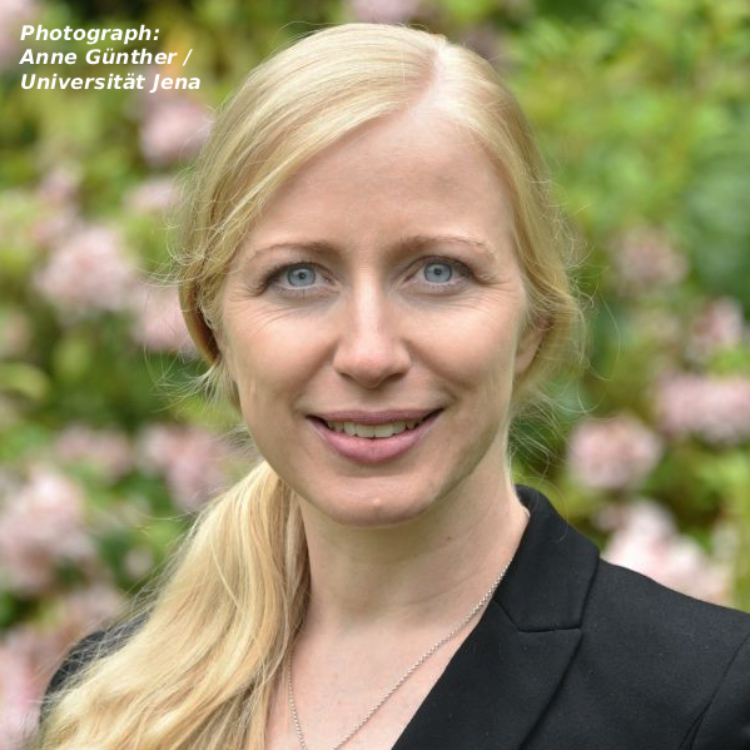
Isabelle Staude
Friedrich-Schiller-Universität Jena
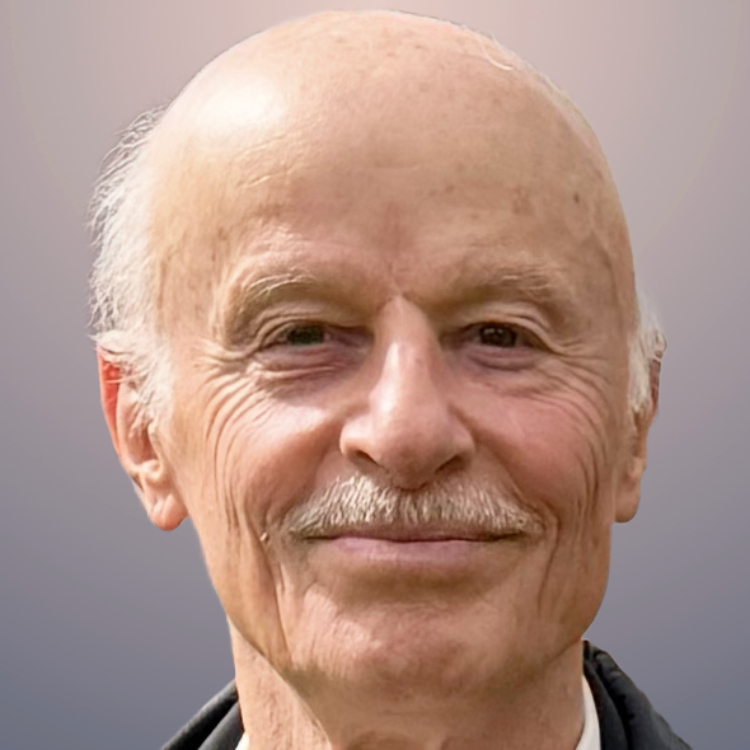
Fritz Keilmann
Ludwig-Maximilians-Universität München
Mark Brongersma
Stanford University
Mark Brongersma is the Stephen Harris Professor of Materials Science and Applied Physics at Stanford University. He received his PhD from the FOM-Institute AMOLF in Amsterdam, The Netherlands, in 1998. From 1998-2001 he was a postdoctoral research fellow at the California Institute of Technology. He coined the terms Plasmonics and Mie-tronics for the fields of science and technology that aim to manipulate light with metallic and high-index nanostructures and below the diffraction limit. He is a pioneer in creating nanophotonic and metasurface based devices. He has authored\co-authored over 275 publications and holds tens of patents in these areas of research and development. He is a highly-cited researcher as identified by Clarivate Analytics and has an h-factor over 100 according to Google Scholar. He was a founder of Rolith Inc that was acquired by Metamaterials Technology Inc in 2016. Brongersma received a National Science Foundation Career Award, the Walter J. Gores Award for Excellence in Teaching, the International Raymond and Beverly Sackler Prize in the Physical Sciences (Physics) for his work on plasmonics, and is a Fellow of OPTICA, MRS, SPIE, and APS.
Peter Baum
University of Konstanz, Germany
Peter Baum is a professor of physics at University of Konstanz, Germany. He received his PhD in 2005 from Ludwig-Maximilians-Universität München, worked as a postdoctoral scholar with Prof. Zewail at Caltech and was a junior group leader with Prof. Krausz at the Max-Planck-Institute of Quantum Optics. Selected awards are the Helmholtz price and several ERC grants. His current research focuses on the interaction of light and matter at ultimately small dimensions of space and time, using electron pulses under light-cycle control. In his spare time, he listens to metal music and goes skiing, swimming or surfing.
Isabelle Staude
Friedrich-Schiller-Universität Jena
Prof. Dr. Isabelle Staude studied physics at the University of Konstanz and subsequently received her Ph.D. degree from the Karlsruhe Institute of Technology, Germany in 2011. For her postdoc, she moved to the Australian National University, Canberra, Australia. She returned to Germany in mid-2015 to establish a junior research grou on functional photonic nanostructures at the Friedrich Schiller University Jena, Germany. In fall 2017, she became a junior professor at the same institution. She was promoted to full professor in spring 2020. She received an Emmy-Noether Grant from the German research Foundation as well as the Hertha Sponer Prize 2017 from the German Physical Society. Isabelle Staude is an alumna of the German Young Academy (Junge Akademie) and a Fellow of the Max Planck School of Photonics.
Fritz Keilmann
Ludwig-Maximilians-Universität München
Fritz Keilmann (*1942) studied meteorology, biophysics and physics in Munich. As a postdoc he worked from 1972 at MIT on precision spectroscopy and invented a record-strong gas laser tunable from microwave to infrared frequencies. From 1974 at the MPI for Solid State Research (Stuttgart), he pioneered coherent phonon propagation and nonlinear infrared spectroscopy of solids, and ultrafast dynamics. He advanced optics instrumentation with all-metal polarizers and filters which he commercialized (Lasnix) in 1984. His all-metal infrared focusing helped him understanding quantum-Hall physics and achieving, from 1995 at the MPI for Biochemistry (Martinsried), super-resolution near-field optical microscopy (s-SNOM) which he and R. Hillenbrand commercialized (Neaspec) in 2007. He pioneered both dual-frequency-comb spectroscopy and, from 2007 at the MPI of Quantum Optics (Garching), infrared supercontinuum sources for s-SNOM to perfect nano-FTIR chemical nanoscopy. In 2009 he was awarded the K.J. Button prize. Since retiring from Max-Planck (2012) and from Neaspec (2017) he continued at the LMU physics department pioneering (2021) nano-FTIR of alive cells in aqueous environment and recently discovered collective structural transitions of a single phospholipid sub-µm-sized vesicle in water (NatComm.16:6033, 2025).